
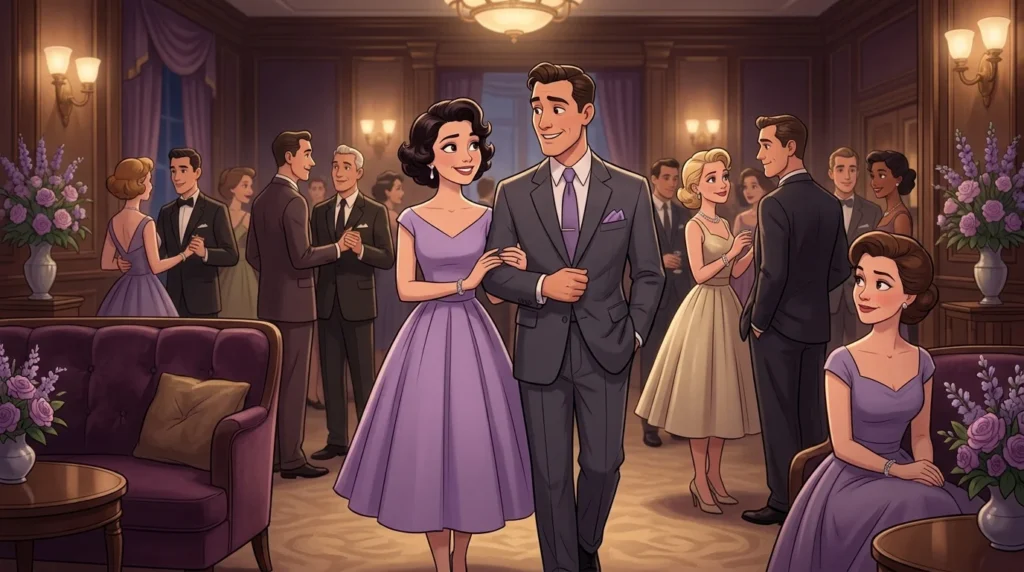

What Does “Lavender Relationship” Mean?
Quick Definition
A lavender relationship is a relationship that is presented publicly to create a particular image or conceal private aspects of one or both partners’ identities, especially regarding sexual orientation.
Key characteristics may include:
- Public appearance as a couple
- Mutual understanding of the arrangement
- Protection of privacy or reputation
- Social or professional reasons rather than romantic ones
Not every private or low-profile relationship is a lavender relationship.
What Does Lavender Relationship Mean in Modern Culture?
Today, people most commonly use the phrase when discussing:
- Celebrity relationships
- Entertainment industry rumors
- LGBTQ+ history
- Public image management
On social media, however, the term is sometimes used loosely or without evidence. It’s important to distinguish between documented historical examples and speculation about current public figures.
What Tone Does Lavender Relationship Convey?
The phrase itself is generally neutral.
Depending on context, it may be:
Historical:
- Discussing past Hollywood practices
Informational:
- Explaining LGBTQ+ history
Speculative:
- Used in celebrity gossip (often without evidence)
Academic:
- Discussing social history and public image
What Does Lavender Relationship Mean in Different Contexts?
Lavender Relationship Meaning in Hollywood History
The term is strongly connected with early Hollywood.
During much of the 20th century, many actors and actresses faced discrimination if they were believed to be LGBTQ+. Some reportedly entered public relationships or marriages that aligned with public expectations.
These arrangements were intended to:
- Protect careers
- Reduce public scrutiny
- Meet studio expectations
- Avoid discrimination
Because historical records vary, not every rumored case has been confirmed.
Lavender Relationship Meaning on Social Media
On TikTok, Reddit, Instagram, and X, the phrase often appears in discussions about celebrity couples.
Example:
“People online are calling it a lavender relationship.”
Meaning:
Some users believe the relationship exists mainly for public appearance.
However, online claims are often speculative and should not be treated as fact.
Lavender Relationship Meaning in LGBTQ+ History
The color lavender has long been associated with LGBTQ+ history and activism.
Because of this historical connection, the phrase “lavender relationship” became associated with relationships intended to hide a person’s sexual orientation during times of widespread discrimination.
Lavender Relationship Meaning Today
Modern lavender relationships, if they exist, may involve various personal reasons, including:
- Privacy
- Family expectations
- Cultural pressure
- Career concerns
- Media attention
The reasons differ from one situation to another.
Origin and History of Lavender Relationship
The phrase developed from the historical association between the color lavender and LGBTQ+ communities.
Throughout the 20th century, lavender became a symbolic color connected with LGBTQ+ identity in Western culture. During periods when being openly LGBTQ+ could lead to discrimination or loss of employment, some public figures reportedly maintained relationships or marriages that helped protect their public image.
Over time, the expression lavender relationship became a way of describing these arrangements.
Today, the term is used both in historical discussions and modern conversations, although contemporary usage is often based on speculation rather than verified facts.
How People Actually Use Lavender Relationship
You’ll commonly see this phrase in:
- Celebrity news
- Entertainment discussions
- LGBTQ+ history articles
- Social media conversations
- Podcasts
- Documentary programs
When to Use Lavender Relationship
Use the term when:
- Discussing documented historical practices
- Explaining LGBTQ+ history
- Referring to the concept in general
- Analyzing media representation
Examples:
- “Historians have written about lavender relationships in classic Hollywood.”
- “The documentary explores the idea of lavender relationships.”
When Not to Use Lavender Relationship
Avoid using the term:
- As a label for real couples without evidence
- To spread rumors
- To question someone’s identity
- As a personal accusation
Respecting privacy is important, especially when discussing living individuals.
Real Examples of Lavender Relationship in Conversations
Example 1: History Class
Person A:
“Why did some actors marry people they weren’t romantically interested in?”
Person B:
“Some historians describe those as lavender relationships.”
Meaning:
The relationship may have existed to protect public image.
Example 2: Social Media
Person A:
“People keep calling them a lavender relationship.”
Person B:
“There’s no confirmed evidence, though.”
Meaning:
The discussion is based on speculation rather than verified facts.
Example 3: Documentary
Person A:
“The documentary explained lavender relationships.”
Person B:
“It focused on old Hollywood.”
Meaning:
The program discussed historical practices.
Example 4: LGBTQ+ History
Person A:
“Why is the term lavender used?”
Person B:
“Because lavender has historical connections with LGBTQ+ communities.”
Meaning:
The color inspired the phrase.
Example 5: Entertainment News
Person A:
“Some articles mentioned a lavender relationship.”
Person B:
“It’s important to separate facts from rumors.”
Meaning:
Not every claim is supported by evidence.
Example 6: University Discussion
Person A:
“Society placed enormous pressure on public figures.”
Person B:
“That’s one reason lavender relationships have been studied.”
Meaning:
The discussion focuses on historical social conditions.
Example 7: Online Forum
Person A:
“Everyone assumes it’s a lavender relationship.”
Person B:
“We really don’t know their private lives.”
Meaning:
Avoid making unsupported assumptions.
Example 8: History Podcast
Person A:
“Hollywood looked very different decades ago.”
Person B:
“Many careers depended on public image.”
Meaning:
Public expectations influenced personal decisions.
Common Mistakes and Misunderstandings
Thinking Every Private Celebrity Relationship Is a Lavender Relationship
This is incorrect.
Most celebrity relationships are simply private relationships.
Without reliable evidence, it is inappropriate to label them.
Assuming Lavender Relationships Always Involve Celebrities
While the term is strongly associated with Hollywood, similar arrangements may occur in other situations where social pressure exists.
Confusing Lavender Relationship With Open Relationship
These are different concepts.
Lavender relationship:
Primarily connected with public image or privacy.
Open relationship:
Partners agree that romantic or sexual relationships with others are permitted.
Assuming Every Lavender Relationship Is Fake
Some historical relationships included genuine friendship, affection, or emotional support, even if romance was not the primary reason for the partnership.
Similar Terms and Related Expressions
| Term | Meaning | Difference |
|---|---|---|
| Marriage of convenience | Marriage for practical reasons | Broader concept |
| Beard | A partner used to conceal someone’s sexual orientation | Usually refers to one person’s public image |
| Public relationship | Relationship seen publicly | May be completely genuine |
| Open relationship | Agreed non-exclusive relationship | Different purpose |
| Platonic relationship | Close relationship without romance | Not necessarily public |
| Cover relationship | Relationship used to hide something | Broader than lavender relationship |
| Public image | How someone is perceived | Not a relationship type |
| LGBTQ+ history | Historical study of LGBTQ+ communities | Broader topic |
Is Lavender Relationship Positive, Negative, or Neutral?
The phrase itself is generally neutral.
Its emotional tone depends on context.
Historical discussions are usually neutral.
Some people view these relationships sympathetically because they were responses to discrimination.
Others discuss them critically in conversations about celebrity culture and media.
Should You Use Lavender Relationship?
Use the phrase if:
- Discussing LGBTQ+ history
- Explaining the concept
- Referring to documented historical examples
- Talking about media history
Avoid using it if:
- Referring to living individuals without evidence
- Repeating celebrity rumors
- Making assumptions about someone’s identity or relationship
Related posts:
 Best Harakiri Meaning Definition, History, Cultural Significance & Modern Usage (2026)
 Apocryphal Meaning: Definition, Origin, Examples & How to Use It (2026)
 Best Variable Meaning in Math: Definition, Types, Examples & How They Work (2026)
 Best Nine Line Meaning: Definition, Origin, Uses, Examples & What It Represents (2026)