
What Does Pose Meaning?
Quick Definition
Pose means to place yourself or something in a particular position, or to present something for discussion or consideration.
Pose as a Verb
As a verb, pose can mean:
- To position your body.
- To create a certain impression.
- To present a question or problem.
Examples:
- “She posed for a photograph.”
- “The decision poses a difficult challenge.”
- “He posed an interesting question.”
Pose as a Noun
As a noun, pose means:
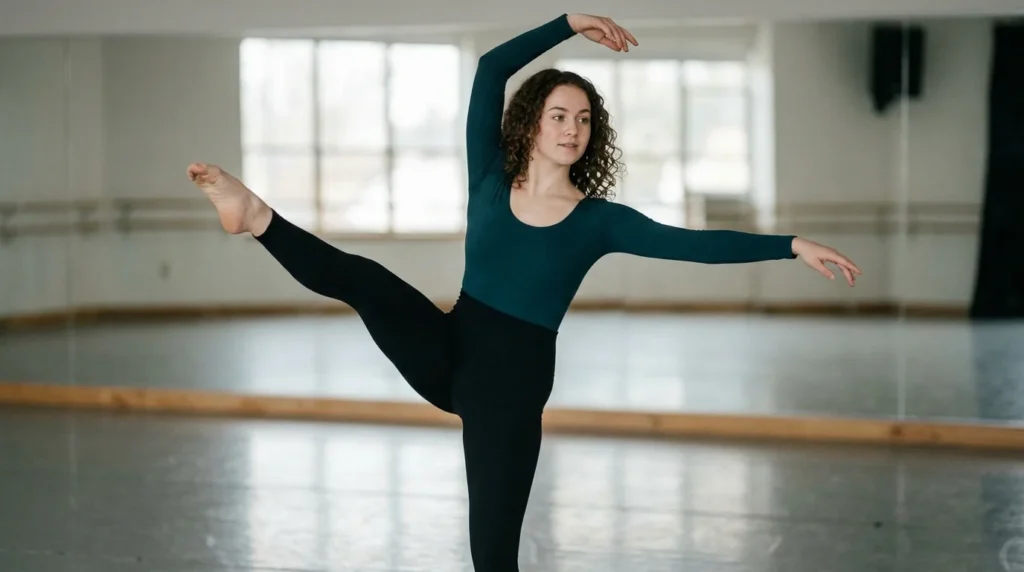
- A particular body position.
- A way of standing or sitting, especially for a photo or artwork.
Examples:
- “The model held a beautiful pose.”
- “The artist captured his pose perfectly.”
What Tone Does It Convey?
The word can feel:
- Creative
- Neutral
- Professional
- Artistic
- Analytical (when referring to problems or questions)
Different Meanings of “Pose”
Pose in Photography
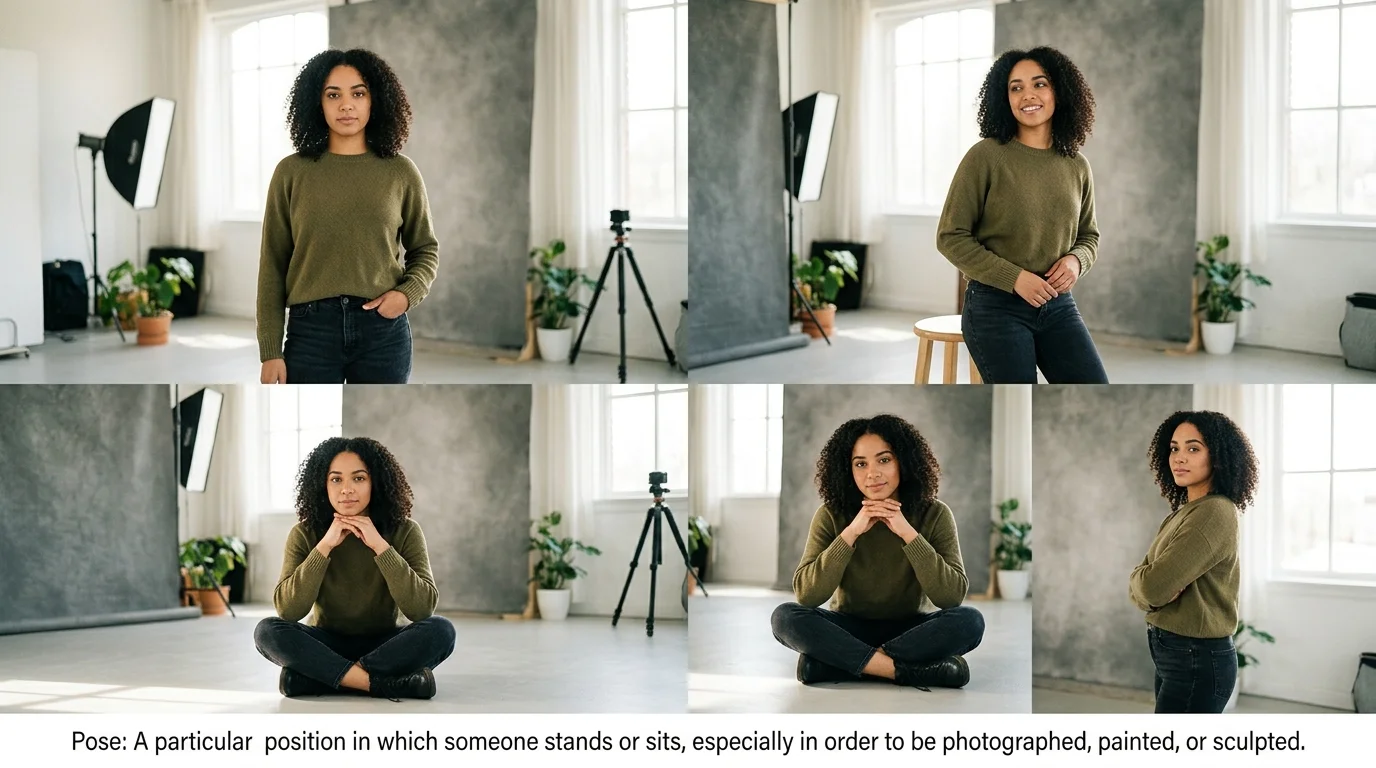
In photography, a pose is a planned position or expression used for a picture.
Examples:
- Smiling at the camera.
- Standing with crossed arms.
- Looking away for a natural photo.
Example: “The photographer asked her to change her pose.”
Meaning: The photographer asked her to adjust her body position.
Pose in Art
Artists often use poses when drawing or painting people.
A pose helps show:
- Movement
- Emotion
- Personality
- Body structure
Example: “The artist studied the model’s pose before painting.”
Pose as a Question
The word can mean to ask or present something.
Example: “The teacher posed a difficult question.”
Meaning: The teacher presented a question for students to answer.
Pose as a Problem or Threat
Pose can also mean to create a difficulty or danger.
Examples:
- “The storm poses a risk.”
- “This mistake could pose a serious problem.”
Meaning: The situation creates a possible challenge or danger.
Types of Poses
Casual Pose
A relaxed and natural position.
Examples:
- Standing comfortably.
- Smiling naturally.
- Sitting casually.
Professional Pose
Common in business photos and formal portraits.
Examples:
- Straight posture.
- Confident expression.
- Hands positioned neatly.
Fashion Pose
Used in modeling and photography.
Examples:
- Dramatic body angles.
- Unique movements.
- Stylish expressions.
Power Pose
A body position that communicates confidence.
Examples:
- Standing tall.
- Open shoulders.
- Strong posture.
Yoga Pose
A specific body position used in yoga practice.
Examples:
- Tree pose.
- Warrior pose.
- Lotus pose.
How People Actually Use “Pose”
The word appears in many situations.
Social Media
People often use pose when sharing photos.
Example: “New pose for my Instagram picture.”
Meaning: A new way of positioning themselves for a photo.
Photography
Photographers guide people by suggesting poses.
Example: “Try a different pose.”
Meaning: Change your body position.
Everyday Speech
People may use pose when talking about problems.
Example: “This could pose a serious issue.”
Meaning: This could create a problem.
Education
Teachers and speakers often pose questions.
Example: “The professor posed an important question.”
Meaning: The professor asked or presented a question.
Real Examples of “Pose” in Conversations
Example 1
Person A: Why are you standing like that?
Person B: I’m posing for a picture.
Meaning: Person B is creating a position for a photo.
Example 2
Person A: Can you take my photo?
Person B: Sure, try a different pose.
Meaning: Change your body position.
Example 3
Person A: What did the teacher ask?
Person B: She posed a challenging question.
Meaning: She presented a difficult question.
Example 4
Person A: Is this situation dangerous?
Person B: Yes, it poses a major risk.
Meaning: It creates a possible danger.
Example 5
Person A: Why do models practice poses?
Person B: To look natural and confident in photos.
Meaning: Poses help create better images.
Common Mistakes and Misunderstandings
Mistake 1: Thinking Pose Only Means Standing for Photos
While photography is a common use, pose can also mean presenting a question or creating a problem.
Mistake 2: Confusing Pose With Pause
Pose means a position or presentation.
Pause means to stop temporarily.
Example:
- “She posed for a photo.”
- “She paused before answering.”
Mistake 3: Thinking Every Pose Is Fake
Some people think posing means pretending. However, posing simply means intentionally positioning yourself.
Mistake 4: Forgetting the Different Grammar Uses
Pose can be:
- A noun: “That is a nice pose.”
- A verb: “She posed for the camera.”
Similar Words and Related Terms
| Word | Meaning | Difference |
|---|---|---|
| Pose | Position yourself or present something | General term |
| Posture | Way someone holds their body | More about natural body position |
| Stance | A particular way of standing or opinion | Often used for views or positions |
| Position | Place or arrangement | Broader meaning |
| Gesture | Movement showing emotion or meaning | Usually smaller movements |
| Expression | Facial look showing emotion | Focuses on the face |
| Model | Person who displays clothing or poses | Professional context |
| Present | Show or introduce something | Broader communication term |
| Ask | Request information | Less formal than pose |
| Create | Make something happen | General action |
Is “Pose” Positive, Negative, or Neutral?
Pose is generally a neutral word.
The meaning depends on context.
Positive examples:
- “She posed beautifully for the photo.”
- “He posed an interesting question.”
Negative examples:
- “The problem poses a serious threat.”
Neutral examples:
- “The artist changed the model’s pose.”
Related posts:
 Best Harakiri Meaning Definition, History, Cultural Significance & Modern Usage (2026)
 Best Concentration Meaning: Definition, Examples, Uses, and Types (2026)
 Apocryphal Meaning: Definition, Origin, Examples & How to Use It (2026)
 Best Variable Meaning in Math: Definition, Types, Examples & How They Work (2026)