
Acne on Chin Meaning and Quick Definition
Quick Definition
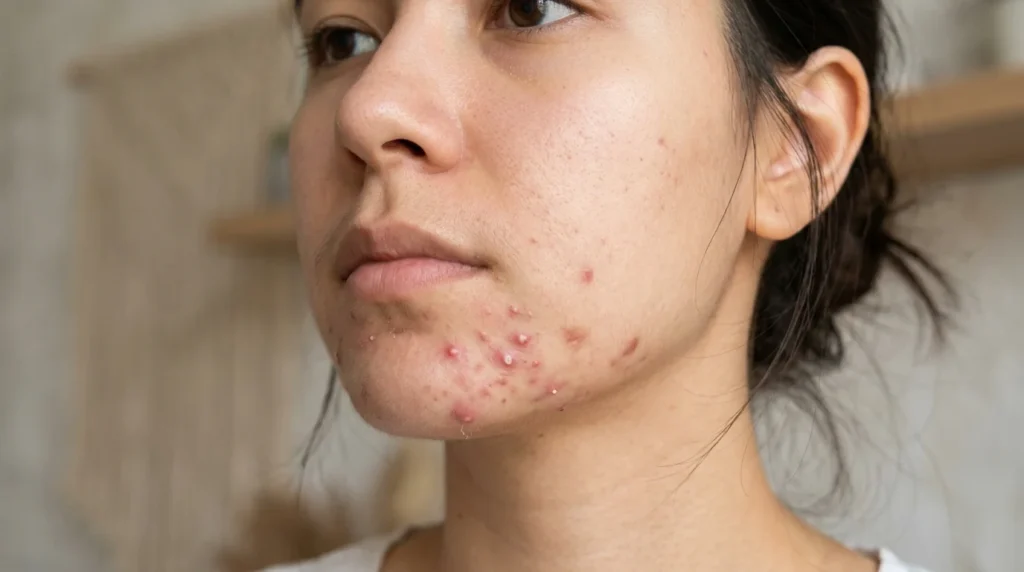
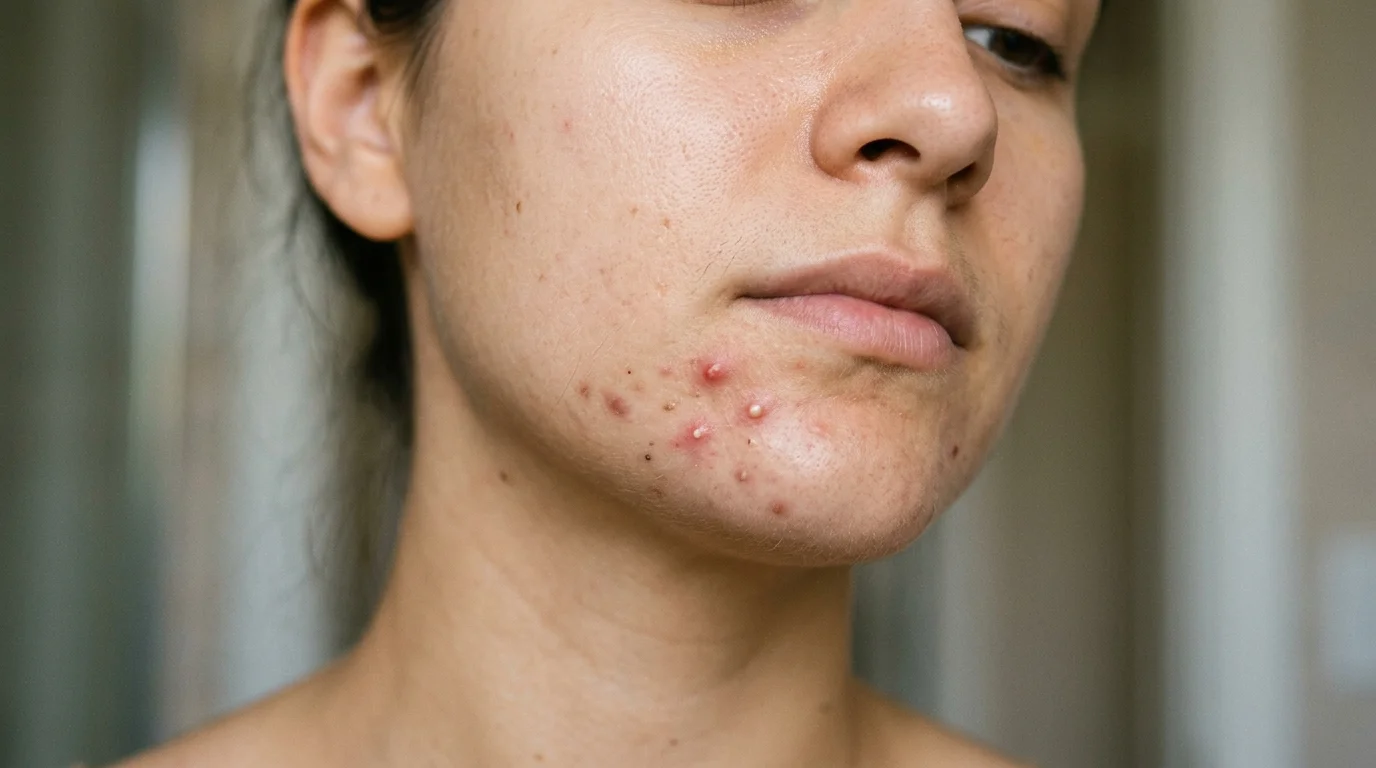
Acne on the chin refers to pimples, blackheads, whiteheads, or deeper acne lesions that develop on or around the chin due to clogged pores and inflammation.
Simple meaning:
Acne on the chin = Breakouts caused by clogged pores, often influenced by hormones but also by other skin and lifestyle factors.
Acne on Chin Meaning: Common Causes
Hormonal Changes
Hormones called androgens can increase oil production in the skin. Extra oil can clog pores and contribute to acne.
Hormonal chin acne is common during:
- Puberty
- Menstrual cycles
- Pregnancy
- Perimenopause
- Certain hormonal conditions
Excess Oil Production
People with naturally oily skin are more likely to develop acne because excess oil mixes with dead skin cells and blocks pores.
Clogged Pores
When dead skin cells aren’t shed properly, they combine with oil to form plugs inside hair follicles.
This can lead to:
- Whiteheads
- Blackheads
- Pimples
Bacteria
A skin bacterium called Cutibacterium acnes can multiply inside clogged pores, contributing to inflammation and acne.
Stress
Stress doesn’t directly cause acne, but it may worsen existing breakouts by influencing hormones and skin inflammation.
Friction and Pressure
Frequent rubbing or pressure on the chin can contribute to breakouts.
Examples include:
- Face masks
- Helmet straps
- Chin straps
- Resting your chin on your hands
Certain Medications
Some medications, including certain steroids or hormone-related treatments, may contribute to acne in some individuals.
Does Chin Acne Always Mean Hormonal Acne?
No.
Although the chin is a common area for hormonal acne, breakouts can also result from:
- Oily skin
- Genetics
- Skincare products that clog pores
- Stress
- Friction
- Poor cleansing habits
A healthcare professional can help determine the underlying cause if acne is persistent or severe.
Types of Chin Acne
Common forms include:
Whiteheads
Small bumps with closed pores.
Blackheads
Open pores that appear dark because of oxidation.
Papules
Small, red, inflamed bumps.
Pustules
Pimples filled with pus.
Nodules and Cysts
Large, painful, deeper lumps beneath the skin that may require medical treatment.
How People Actually Experience Chin Acne
People often notice:
- Breakouts that return in the same area
- Pimples before their menstrual period
- Tender or painful spots under the skin
- Acne that takes longer to heal than forehead pimples
The experience varies from person to person.
Real Examples of Acne on Chin Meaning
Example 1: Monthly Breakouts
Person A: I always get pimples on my chin before my period.
Person B: Hormonal changes may be contributing to your breakouts.
Meaning:
Hormones can influence oil production and acne.
Example 2: Stress
Person A: My chin keeps breaking out during exams.
Person B: Stress may be making your acne worse.
Meaning:
Stress can contribute to flare-ups.
Example 3: Face Mask
Person A: I started getting pimples after wearing a mask every day.
Person B: Friction and trapped moisture may be contributing.
Meaning:
Mechanical irritation can play a role.
Example 4: Oily Skin
Person A: My chin is always oily.
Person B: Excess oil can increase the chance of clogged pores.
Meaning:
Oil production is one factor in acne development.
Example 5: Persistent Acne
Person A: My chin acne never seems to go away.
Person B: It may be worth seeing a dermatologist for an evaluation.
Meaning:
Persistent acne may require prescription treatment.
Common Mistakes and Misunderstandings About Acne on Chin Meaning
Chin Acne Doesn’t Always Mean Hormone Problems
While hormones are a common factor, not every chin breakout is caused by a hormonal imbalance.
Dirty Skin Isn’t the Main Cause
Acne is not simply the result of poor hygiene. Overwashing or scrubbing too hard can actually irritate the skin and make acne worse.
Popping Pimples Can Delay Healing
Squeezing pimples may increase inflammation, raise the risk of infection, and lead to scarring.
How to Treat and Prevent Chin Acne
Good Skincare Habits
- Wash your face gently twice a day.
- Use non-comedogenic skincare and makeup products.
- Remove makeup before sleeping.
- Avoid touching or picking at pimples.
Over-the-Counter Treatments
Products containing ingredients such as:
- Benzoyl peroxide
- Salicylic acid
- Adapalene (where appropriate)
may help mild acne. Follow product directions and consult a healthcare professional if you’re unsure which treatment is right for you.
Lifestyle Tips
- Manage stress where possible.
- Clean items that touch your face, such as phone screens.
- Change pillowcases regularly.
- Maintain a balanced diet and healthy sleep routine.
While research on diet and acne is still evolving, some people notice improvements by identifying personal dietary triggers.
When to See a Dermatologist
Consider medical advice if:
- Acne is painful or severe.
- Breakouts leave scars.
- Over-the-counter treatments don’t help after several weeks.
- You suspect hormonal acne or another underlying condition.
Related Skin Terms
| Term | Meaning | Difference |
|---|---|---|
| Acne | General skin condition causing pimples | Includes all facial and body areas |
| Blackhead | Open clogged pore | Dark surface due to oxidation |
| Whitehead | Closed clogged pore | Small white bump |
| Cystic Acne | Deep, painful acne | More severe form |
| Sebum | Natural skin oil | Helps protect the skin but can contribute to acne |
| Comedone | Clogged hair follicle | Includes blackheads and whiteheads |
| Rosacea | Chronic skin condition causing redness | Different from acne |
| Dermatitis | Skin inflammation | Separate condition with different causes |
Is Acne on the Chin Serious?
Most cases of chin acne are not serious and can often be managed with consistent skincare and appropriate treatment.
However, recurring, painful, or severe acne may benefit from evaluation by a dermatologist to identify the best treatment approach.
Related posts:
 Best Harakiri Meaning Definition, History, Cultural Significance & Modern Usage (2026)
 Apocryphal Meaning: Definition, Origin, Examples & How to Use It (2026)
 Best Variable Meaning in Math: Definition, Types, Examples & How They Work (2026)
 Best Nine Line Meaning: Definition, Origin, Uses, Examples & What It Represents (2026)