
Blemish Meaning on Face
A blemish on the face is a visible mark, spot, or imperfection on the skin that affects its appearance. Facial blemishes can include pimples, acne marks, dark spots, discoloration, small scars, and other uneven areas of skin. They may appear on the forehead, cheeks, chin, nose, or other parts of the face.
The word blemish does not refer to one specific skin condition. It is a general term used to describe a visible imperfection, whether temporary or long-lasting. Some facial blemishes develop because of clogged pores, excess oil, hormonal changes, or inflammation, while others result from sun exposure, aging, or previous skin injuries.
Common Examples of Facial Blemishes
Pimples: Small, raised spots that develop when pores become clogged or inflamed.
Acne marks: Flat red, brown, or dark marks that remain after acne heals.
Dark spots: Areas of skin that appear darker than the surrounding skin, often because of increased pigmentation.
Blackheads and whiteheads: Types of clogged pores associated with acne.
Small scars: Marks that remain after an injury, acne, or another skin problem.
Uneven skin tone: Areas of discoloration that make the complexion appear less uniform.
What Causes Blemishes on the Face?
Facial blemishes can develop for several reasons, including hormonal fluctuations, excess oil production, clogged pores, inflammation, sun exposure, and irritation from skincare products. Genetics and certain medications can also influence skin appearance.
Not every blemish is acne, and not every skin mark requires treatment. Gentle cleansing, non-comedogenic skincare products, and appropriate sun protection may help prevent some blemishes from worsening. Persistent, painful, or changing skin spots should be assessed by a healthcare professional.
How to Use Blemish in a Sentence
“She uses a gentle cleanser to help reduce facial blemishes.”
“The small blemish on his cheek disappeared after a few days.”
“Sun protection can help prevent some dark spots and other skin discoloration.”
In simple terms, a blemish on the face is any visible skin mark or imperfection that affects the appearance of the complexion.
Blemish Meaning in Farsi
In Farsi (Persian), blemish can be translated in several ways depending on whether it refers to a skin mark, a physical imperfection, or a flaw in someone’s character or reputation.
Persian Translations of Blemish
لکه (lakkeh): Spot or stain, often used for a mark on the skin or another surface.
لک پوستی (lak-e پوستی): Skin spot or skin discoloration.
عیب (eyb): Flaw, defect, or imperfection.
نقص (naqs): Defect, deficiency, or imperfection.
جوش (joosh): Pimple or acne spot, when the context specifically concerns acne.
For example, “a blemish on the face” may be translated as لکه روی صورت (a spot on the face) or described more specifically as لک پوستی صورت (facial skin discoloration). The best translation depends on the type of mark being discussed.
Blemish Examples in Farsi
“She has a blemish on her cheek.” — او روی گونهاش یک لکه دارد.
“This cream helps reduce skin blemishes.” — این کرم به کاهش لکههای پوستی کمک میکند.
“The mistake was a blemish on his reputation.” — آن اشتباه لکهای بر شهرت او بود.
The last example illustrates that blemish is not limited to skincare. It can also describe something that damages a person’s reputation, record, or otherwise positive image.
Blemish Meaning in English
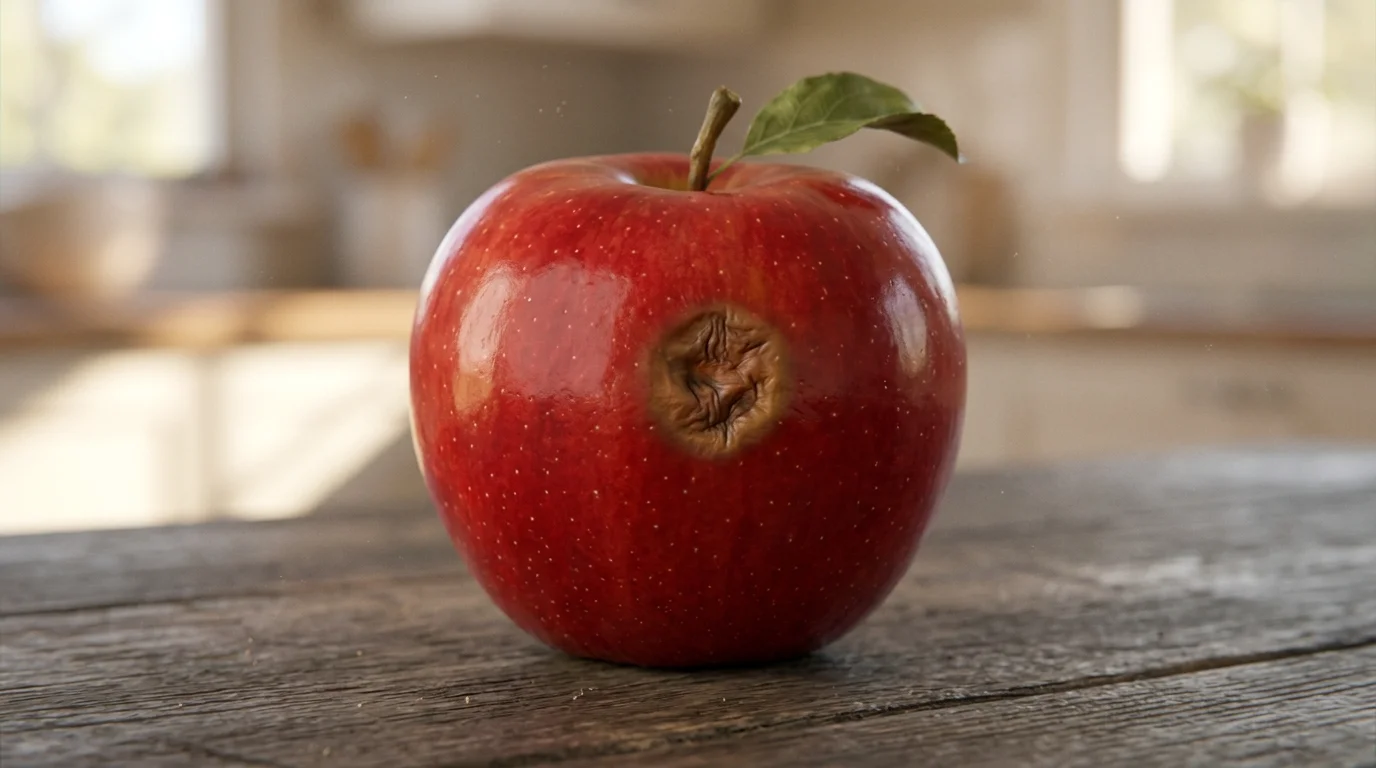
In English, blemish means a mark, flaw, defect, or imperfection that affects the appearance, quality, or reputation of something. It can be used as both a noun and a verb.
As a noun, it refers to the imperfection itself. As a verb, it means to damage, spoil, or make something appear less perfect.
Blemish as a Noun
A blemish can be a spot on the skin, a defect in an object, or a flaw in someone’s reputation.
Examples:
“The pimple was a small blemish on her forehead.”
“There is a blemish on the surface of the new table.”
“The scandal became a blemish on the company’s reputation.”
Blemish as a Verb
When used as a verb, blemish means to spoil or damage something that was previously regarded as good or attractive.
Examples:
“The scratch blemished the polished surface.”
“The controversy blemished his otherwise successful career.”
“A careless mistake should not blemish an otherwise excellent performance.”
What Does Blemish Mean in Simple Words?
In simple English, a blemish is something that makes a person, object, or reputation appear imperfect. It may be a spot on someone’s face, a scratch on a product, or a mistake that damages someone’s public image.
The exact meaning depends on the context in which the word is used.
Blemish Meaning Synonyms
Synonyms for blemish are words with similar meanings, such as spot, mark, flaw, defect, imperfection, and stain. However, the most appropriate synonym depends on whether the word describes skin, an object, a person’s character, or a reputation.
Common Synonyms for Blemish
Spot: A small, visible mark, especially on the skin or a surface.
Mark: A visible sign, discoloration, or impression.
Flaw: An imperfection that reduces the quality or attractiveness of something.
Defect: A fault or problem that may affect function, quality, or appearance.
Imperfection: Something that is not completely perfect.
Stain: A discolored mark, often caused by a substance.
Discoloration: A change in the normal color of a surface or skin.
Pimple: A small, raised skin spot, often associated with acne.
Scar: A mark left after a wound, injury, or skin damage has healed.
Tarnish: A loss of brightness or reputation, depending on the context.
Which Synonym Is Best for Blemish?
For facial skincare, spot, skin mark, and imperfection are often suitable alternatives. For a damaged object, defect, flaw, or mark may be more accurate. When describing a person’s reputation, stain or flaw can convey the intended meaning.
For example, “a blemish on her face” can be rewritten as “a spot on her face,” while “a blemish on his reputation” can be expressed as “a stain on his reputation.”
These words are related but not always interchangeable. A scar describes a particular type of lasting mark, while a blemish is a broader term for an imperfection.
Blemish Meaning Arabic
In Arabic, blemish can be translated as عيب (ʿayb) when referring to a flaw or defect, or بقعة (buqʿa) when referring to a spot or mark. For facial skin, more specific expressions may be appropriate depending on whether the blemish is acne, discoloration, or another type of skin imperfection.
Arabic Translations of Blemish
عيب (ʿayb): Flaw, defect, or imperfection.
بقعة (buqʿa): Spot or mark.
علامة (ʿalāma): Mark or visible sign.
عيب في البشرة (ʿayb fī al-bashara): Skin imperfection.
حب الشباب (ḥabb al-shabāb): Acne.
ندبة (nadba): Scar.
Blemish Examples in Arabic
“A blemish on the face” — بقعة على الوجه.
“A skin blemish” — عيب في البشرة.
“A blemish on his reputation” — عيب في سمعته.
“The product helps conceal blemishes.” — يساعد المنتج على إخفاء عيوب البشرة.
Does Blemish Always Mean Acne in Arabic?
No. Blemish is a general English word, whereas حب الشباب specifically means acne. If the mark is a dark spot, scar, or other skin imperfection, a different Arabic expression may be more accurate.
When translating the word, consider the context to distinguish a physical mark from a broader flaw in quality or reputation.
Blemish Meaning Acne
In the context of acne, a blemish is a visible skin imperfection that may be caused by a clogged pore, inflammation, or the marks left after a breakout. The word is commonly used in skincare because it covers several types of acne-related spots without referring to just one specific condition.
A blemish may be an active pimple, a blackhead, a whitehead, or a flat mark that remains after acne has healed. However, not every blemish is acne-related, and acne itself can cause several different types of skin changes.
Types of Acne-Related Blemishes
Papules: Small, raised, inflamed bumps that may appear red or darker than the surrounding skin.
Pustules: Inflamed bumps containing visible pus.
Blackheads: Open clogged pores with darkened material at the surface.
Whiteheads: Closed clogged pores that appear as small bumps.
Post-acne marks: Flat red, pink, brown, or dark spots that remain after a breakout.
Acne scars: Changes in skin texture that may remain after deeper inflammation.
What Is the Difference Between Acne and Blemishes?
Acne is a skin condition involving clogged pores and inflammation. Blemish is a broader descriptive term for a visible imperfection. Acne can cause blemishes, but blemishes can also result from sun damage, irritation, pigmentation changes, or other skin conditions.
For example, a red pimple is an active acne blemish, while a flat brown mark left after the pimple heals is a post-inflammatory pigmentation mark. A small scar with an uneven texture is different from both.
How Can Acne Blemishes Be Managed?
Gentle skincare and avoiding the squeezing or picking of pimples can help reduce irritation and the risk of scarring. Depending on the type of acne, ingredients such as salicylic acid or benzoyl peroxide may be useful for some people. Sunscreen can help prevent dark marks from becoming more noticeable.
Persistent, painful, or scarring acne may require professional treatment. A skincare product described as “anti-blemish” is not necessarily effective for every type of spot, so it is important to identify the underlying problem.
Blemish Meaning in Chinese
In Chinese, blemish has several possible translations depending on its meaning. When describing facial skin, it can refer to a spot, mark, or imperfection. When used figuratively, it can mean a flaw or defect in a person’s character, an object’s quality, or someone’s reputation.
Chinese Translations of Blemish
瑕疵 (xiá cī): Flaw, defect, or imperfection; commonly used for products, appearance, and quality.
斑点 (bān diǎn): Spot or mark, including certain visible skin spots.
污点 (wū diǎn): Stain or blemish, especially a figurative stain on someone’s reputation.
皮肤瑕疵 (pí fū xiá cī): Skin imperfections.
痘痘 (dòu dou): Pimples or acne bumps, commonly used in everyday Mandarin.
色斑 (sè bān): Pigmented skin spots or patches.
Blemish Examples in Chinese
“She has a blemish on her face.” — 她脸上有一个瑕疵。
“This product helps cover skin blemishes.” — 这款产品有助于遮盖皮肤瑕疵。
“The incident became a blemish on his reputation.” — 这件事成了他声誉上的污点。
“He has acne blemishes.” — 他有痘痘和痘印。
The most suitable translation depends on the specific meaning. 瑕疵 is a useful general translation for an imperfection, 痘痘 refers to pimples, and 污点 is especially suitable for a figurative blemish on a reputation.
Blemish Meaning in the Bible
In the Bible, blemish generally refers to a physical defect, imperfection, or flaw. In biblical contexts, it can also carry symbolic significance related to purity, holiness, moral integrity, and the standards associated with offerings made to God.
The meaning depends on the passage and its historical setting. In several Old Testament laws, animals offered as sacrifices were required to be without blemish. In other passages, related language describes spiritual or moral integrity.
Blemish in Old Testament Sacrifices
In the Old Testament, certain sacrificial animals were required to be free from defects. Deuteronomy 17:1 prohibits offering an ox or sheep with a serious defect or blemish because such an offering would be unacceptable to God.
In this context, blemish refers primarily to a physical defect in the animal. The requirement reflected the religious importance of presenting an acceptable offering rather than something disqualified under the law.
Leviticus 22:20–21 also discusses the requirement that certain offerings be without blemish. These passages are part of the sacrificial laws given to ancient Israel.
The Symbolic Meaning of Blemish in the Bible
Beyond its literal meaning, blemish can symbolize imperfection or something that falls short of an expected standard. In Christian interpretation, the requirement for unblemished sacrifices is sometimes understood as part of the broader biblical themes of holiness, purity, and the significance of Christ’s sacrifice.
For example, 1 Peter 1:19 describes Christ as a lamb without blemish or defect. In this New Testament passage, the language connects the imagery of an unblemished sacrificial lamb with the Christian understanding of Christ as the one whose sacrifice brings redemption.
The symbolic meaning should be distinguished from the original context of the Old Testament sacrificial laws.
Does Blemish Mean Sin in the Bible?
Not necessarily. In passages concerning sacrificial animals, blemish often refers to a physical defect. In broader spiritual interpretations, it may represent imperfection or moral fault, but the word does not automatically mean sin in every biblical passage.
The correct interpretation depends on the specific verse, its surrounding text, and whether the reference is literal or figurative.

What Does Blemish Meaning?
Quick Definition
A blemish is a minor flaw, mark, discoloration, or imperfection on a person’s skin, an object, or even someone’s reputation.
Literal Meaning
In its literal sense, a blemish may refer to:
- Pimples
- Acne
- Dark spots
- Birthmarks
- Small scratches
- Stains
- Surface defects
Figurative Meaning
Figuratively, blemish can describe:
- A mistake
- A flaw in character
- A damaged reputation
- An imperfection in an otherwise excellent record
For example:
“The scandal was the only blemish on his successful career.”
What Tone Does It Convey?
The word is generally:
- Neutral
- Descriptive
- Slightly negative, depending on context
Origin and History of “Blemish”
The word blemish entered English during the Middle Ages through Old French. It originally referred to physical defects or damage and later expanded to include moral flaws, reputational issues, and other imperfections.
Today, blemish is widely used in skincare, fashion, literature, business, and everyday conversation.
How People Actually Use “Blemish”
You’ll commonly hear blemish used when discussing:
Skincare
“I woke up with a small blemish on my chin.”
Meaning: A pimple or minor skin imperfection.
Beauty Products
“This cream helps reduce the appearance of blemishes.”
Meaning: It targets acne marks, dark spots, or uneven skin.
Objects
“The antique table has one small blemish.”
Meaning: A minor scratch or defect.
Reputation
“His record remained free of any blemish.”
Meaning: His reputation stayed untarnished.
Blemish in Skincare
In skincare, a blemish usually refers to any visible skin imperfection.
Common examples include:
- Acne
- Pimples
- Blackheads
- Whiteheads
- Dark spots
- Hyperpigmentation
- Red marks left after breakouts
Not every blemish is caused by acne. Some may result from sun exposure, irritation, or minor injuries.
Real Examples of “Blemish” in Sentences
Example 1
“She used concealer to cover a small blemish.”
Meaning: She covered a minor skin imperfection.
Example 2
“The new phone arrived without a single blemish.”
Meaning: It had no scratches or defects.
Example 3
“One mistake shouldn’t blemish your entire career.”
Meaning: One error shouldn’t damage your reputation.
Example 4
“The painting had only one tiny blemish in the corner.”
Meaning: It had a small flaw.
Example 5
“The dermatologist recommended products designed for blemish-prone skin.”
Meaning: Skin that frequently develops acne or other imperfections.
Common Mistakes and Misunderstandings
Mistake 1: Thinking Blemish Means Only Acne
While acne is a common type of blemish, the word also includes scars, dark spots, discoloration, and other imperfections.
Mistake 2: Confusing Blemishes with Scars
A blemish may be temporary, while a scar is usually permanent or long-lasting.
Mistake 3: Assuming It Only Refers to Skin
Blemish can also describe flaws in products, artwork, buildings, reputations, and performances.
Mistake 4: Believing Every Blemish Is Serious
Most blemishes are minor imperfections and don’t indicate a major problem.
Similar Words and Synonyms
| Word | Meaning | Difference |
|---|---|---|
| Blemish | Minor flaw or imperfection | Broad term for physical or figurative flaws |
| Spot | Small mark | Often used for skin or stains |
| Pimple | Inflamed acne lesion | A specific type of blemish |
| Scar | Mark left after healing | Usually permanent |
| Defect | Fault or flaw | Often used for manufactured items |
| Imperfection | Something not perfect | General term |
| Mark | Visible sign | Neutral meaning |
| Stain | Discoloration | Usually caused by a substance |
| Flaw | Weakness or defect | Can describe objects or character |
| Discoloration | Uneven coloring | Common in skincare discussions |
Is “Blemish” Positive, Negative, or Neutral?
Generally Neutral
Blemish is primarily a descriptive word used to identify a flaw or imperfection.
Slightly Negative Context
Because it refers to something less than perfect, it can carry a mildly negative tone, especially in beauty or product descriptions.
Figurative Use
When referring to a person’s reputation, calling something a blemish often implies a minor setback rather than a defining failure.
Related posts:
 Apocryphal Meaning: Definition, Origin, Examples & How to Use It (2026)
 Best Bifurcated Meaning: Definition, Uses, Examples & Origin (2026)
 Powerful Tanzanite Meaning Symbolism, Spiritual Significance, Benefits & Uses (2026)
 Anti Aliasing Meaning Complete Guide to Definition, Types & Examples (2026)