

What Does “Federal” Mean?
Quick Definition
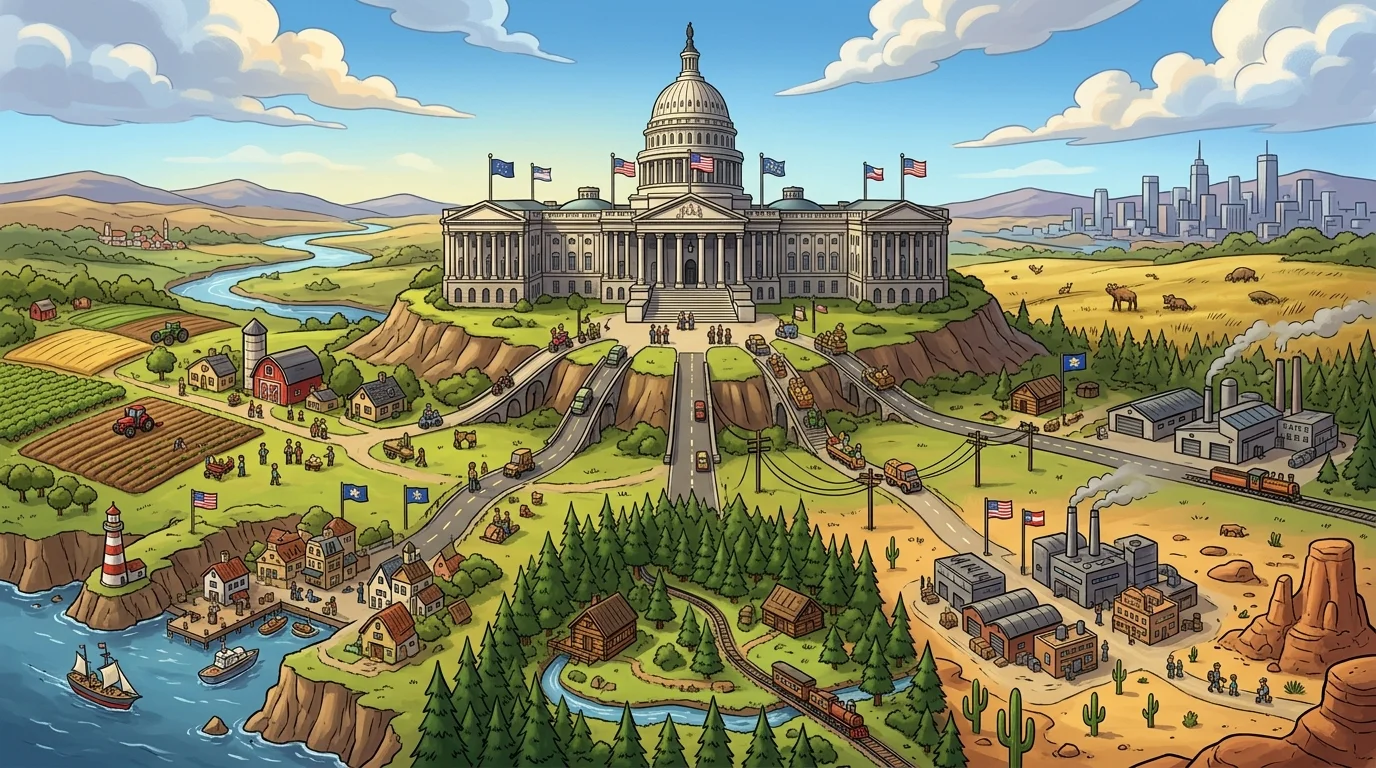
Federal means connected with or belonging to the central government of a country where governmental powers are shared with regional governments.
Simple definition:
Federal = Relating to the national government rather than state or local governments.
What Does Federal Mean in Government?
In government, federal describes institutions, laws, and agencies that operate at the national level.
Examples include:
- Federal government
- Federal courts
- Federal laws
- Federal agencies
- Federal taxes
Example:
“Federal law applies throughout the entire country.”
Meaning:
The law is enforced nationwide rather than only in one state.
What Tone Does Federal Convey?
The word is neutral.
It is commonly used in:
- Politics
- Government
- Legal documents
- News reports
- Academic writing
What Does Federal Mean in Different Contexts?
Federal Meaning in Politics
In politics, federal refers to the national government and the way power is divided between national and regional governments.
Countries with federal systems include:
- United States
- Canada
- Australia
- Germany
- India
- Brazil
- Mexico
Federal Meaning in Law
Federal law applies across the entire country.
Examples include:
- Federal criminal law
- Federal employment law
- Federal tax law
- Federal civil rights law
Some legal matters are handled by federal courts instead of state courts.
Federal Meaning in the United States
In the U.S., the federal government consists of three branches:
- Executive Branch
- Legislative Branch
- Judicial Branch
Each branch has specific responsibilities under the U.S. Constitution.
Federal Meaning in Employment
A federal employee works for the national government rather than a state or local government.
Examples:
- FBI agents
- Postal workers
- National park employees
- Federal judges
Federal Meaning in Banking
The word also appears in banking.
Examples:
- Federal Reserve
- Federal credit union
- Federal deposit insurance
These institutions operate under national laws or oversight.
Origin and History of Federal
The word federal comes from the Latin word foedus, meaning treaty, agreement, or covenant.
It entered English through the Latin adjective foederalis, referring to partnerships formed by agreement.
Over time, the word came to describe governments where authority is divided between a central government and regional governments under a constitutional system.
How People Actually Use Federal
You’ll often hear the word in:
- News broadcasts
- Political debates
- Court cases
- Tax discussions
- Government websites
- Employment listings
When to Use Federal
Use federal when referring to:
- National government
- Nationwide laws
- Government agencies
- National courts
- Public policies
Examples:
- “Federal officials announced new regulations.”
- “The case moved to federal court.”
- “She works for the federal government.”
When Not to Use Federal
Don’t use federal when referring only to:
- City governments
- County governments
- Local schools
- Municipal agencies
Those are generally considered local or state matters.
Real Examples of Federal in Conversations
Example 1: Government
Person A:
“Who created this law?”
Person B:
“It was passed by the federal government.”
Meaning:
The national government created the law.
Example 2: Taxes
Person A:
“Why do I pay federal taxes?”
Person B:
“They help fund national government programs.”
Example 3: Employment
Person A:
“Where does she work?”
Person B:
“She’s a federal employee.”
Meaning:
She works for the national government.
Example 4: Court
Person A:
“Which court is handling the case?”
Person B:
“The federal court.”
Meaning:
The case falls under national jurisdiction.
Example 5: News
Person A:
“What happened today?”
Person B:
“The federal government announced new policies.”
Meaning:
The national government made the announcement.
Example 6: Education
Person A:
“Who sets education rules?”
Person B:
“Some are federal, while others are decided by the states.”
Example 7: Banking
Person A:
“What is the Federal Reserve?”
Person B:
“It’s the central banking system of the United States.”
Example 8: Public Safety
Person A:
“Who investigates certain national crimes?”
Person B:
“Federal law enforcement agencies.”
Common Mistakes and Misunderstandings
Thinking Federal Means the Same as State
They are different.
- Federal: National government.
- State: Individual regional governments.
Assuming Every Law Is Federal
Many laws are created by state or local governments.
Federal laws apply nationwide, while state laws apply within individual states.
Confusing Federal With National in Every Country
Not all countries have a federal system.
Some countries have a unitary system, where most authority belongs to the national government.
Similar Words and Related Terms
| Term | Meaning | Difference |
|---|---|---|
| National | Relating to the entire country | Broader than federal |
| State | Regional government | Below the federal level |
| Local | City or county government | Smaller jurisdiction |
| Government | Governing authority | Can refer to any level |
| Constitution | Supreme legal framework | Defines federal powers |
| Congress | National legislature (U.S.) | Part of the federal government |
| Federalism | System of shared government powers | Political principle |
| Public sector | Government organizations | Includes federal, state, and local |
Is Federal Positive, Negative, or Neutral?
Federal is a neutral word.
Its meaning depends on context.
Examples:
Positive:
- “Federal disaster relief helped affected communities.”
Neutral:
- “Federal elections are held every four years.”
Negative:
- “The company was investigated under federal law.”
The word itself carries no positive or negative meaning.
Should You Use Federal?
Use federal when discussing:
- National government
- Politics
- Law
- Public administration
- Government agencies
Avoid using it when referring exclusively to local or municipal matters.
Related posts:
 Best Harakiri Meaning Definition, History, Cultural Significance & Modern Usage (2026)
 Apocryphal Meaning: Definition, Origin, Examples & How to Use It (2026)
 Best Variable Meaning in Math: Definition, Types, Examples & How They Work (2026)
 Best Nine Line Meaning: Definition, Origin, Uses, Examples & What It Represents (2026)