

Toe the Line Meaning
Quick Definition
Toe the line means:
- Follow the rules.
- Meet required standards.
- Accept authority or instructions.
- Conform to expectations.
In simple words, when someone toes the line, they do what is expected of them.
Origin of “Toe the Line”
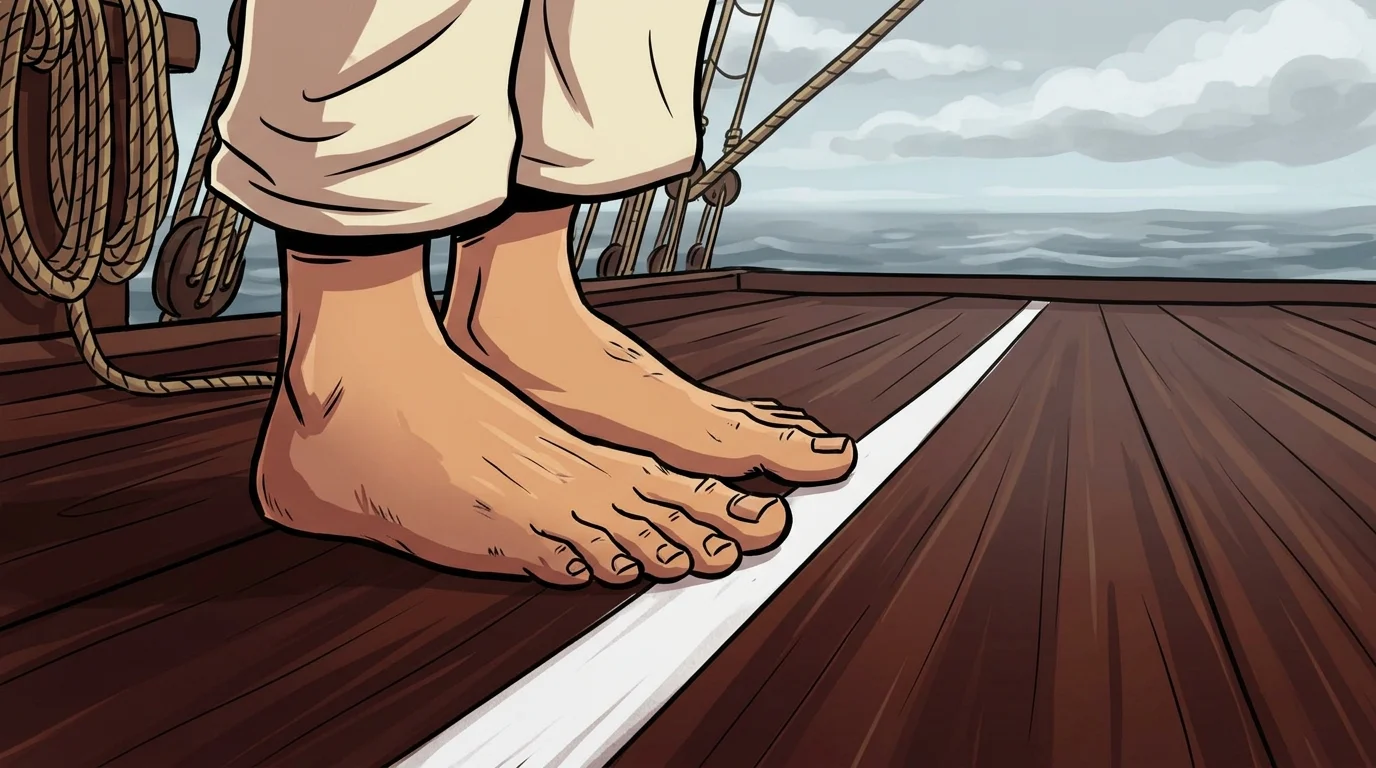
The exact origin of toe the line is debated, but it is commonly believed to come from situations where people were required to stand with their toes touching a marked line.
Possible origins include:
Military Use
Soldiers may have been instructed to stand in formation with their toes aligned along a line.
Sports and Racing
Athletes may have been required to place their feet at a starting line before a race.
Over time, the phrase developed a figurative meaning: following instructions and staying within boundaries.
How People Actually Use “Toe the Line”
Workplace
Example:
“Employees must toe the line and follow company policies.”
Meaning:
Employees must follow workplace rules.
Politics
Example:
“The party expects members to toe the line.”
Meaning:
Members are expected to support the party’s position.
Education
Example:
“Students are expected to toe the line in the classroom.”
Meaning:
Students should follow school rules and expectations.
Everyday Conversation
Example:
“After getting a warning, he started to toe the line.”
Meaning:
He began behaving more appropriately.
Real Examples of “Toe the Line” in Conversations
Example 1
Person A: Why did the manager talk to him?
Person B: He wasn’t toeing the line.
Meaning: He was not following expectations or rules.
Example 2
Person A: Does the company allow employees to make their own decisions?
Person B: Some freedom is allowed, but everyone still has to toe the line.
Meaning: Employees must follow certain rules.
Example 3
Person A: Why did she change her behavior?
Person B: Her coach told her to toe the line.
Meaning: She was told to follow instructions.
Example 4
Person A: Why are politicians supporting that decision?
Person B: They are expected to toe the party line.
Meaning: They are expected to follow the group’s official position.
Example 5
Person A: Did the employee improve?
Person B: Yes, he started toeing the line.
Meaning: He began following workplace expectations.
Toe the Line vs. Toe the Party Line
These phrases are often confused.
Toe the Line
Means:
- Follow rules.
- Meet expectations.
- Behave properly.
Example:
“Workers must toe the line.”
Toe the Party Line
Means:
- Support a group’s official opinion or position.
Example:
“The politician refused to toe the party line.”
Common Mistake: “Tow the Line”
A common error is writing:
❌ Tow the line
The correct phrase is:
✅ Toe the line
“Toe” refers to touching something with your toe, which connects to the phrase’s original meaning.
Synonyms and Related Expressions
| Expression | Meaning |
|---|---|
| Follow the rules | Obey instructions |
| Comply | Act according to requirements |
| Conform | Match expectations |
| Fall in line | Accept authority or direction |
| Follow orders | Do what is instructed |
| Play by the rules | Behave fairly and correctly |
| Toe the party line | Support a group’s official position |
Is “Toe the Line” Positive or Negative?
The phrase can be neutral, positive, or negative depending on context.
Positive Meaning
It can suggest:
- Responsibility.
- Discipline.
- Professional behavior.
Example:
“New employees quickly learned to toe the line.”
Negative Meaning
It can suggest:
- Blind obedience.
- Lack of independence.
- Excessive conformity.
Example:
“The organization expects everyone to toe the line without questioning decisions.”
When Should You Use “Toe the Line”?
Use toe the line when talking about:
- Workplace rules.
- Team expectations.
- Authority.
- Social standards.
- Policies.
- Group decisions.
It works in both casual and formal conversations.
Related posts:
 Best Harakiri Meaning Definition, History, Cultural Significance & Modern Usage (2026)
 Apocryphal Meaning: Definition, Origin, Examples & How to Use It (2026)
 Best Variable Meaning in Math: Definition, Types, Examples & How They Work (2026)
 Best Nine Line Meaning: Definition, Origin, Uses, Examples & What It Represents (2026)