
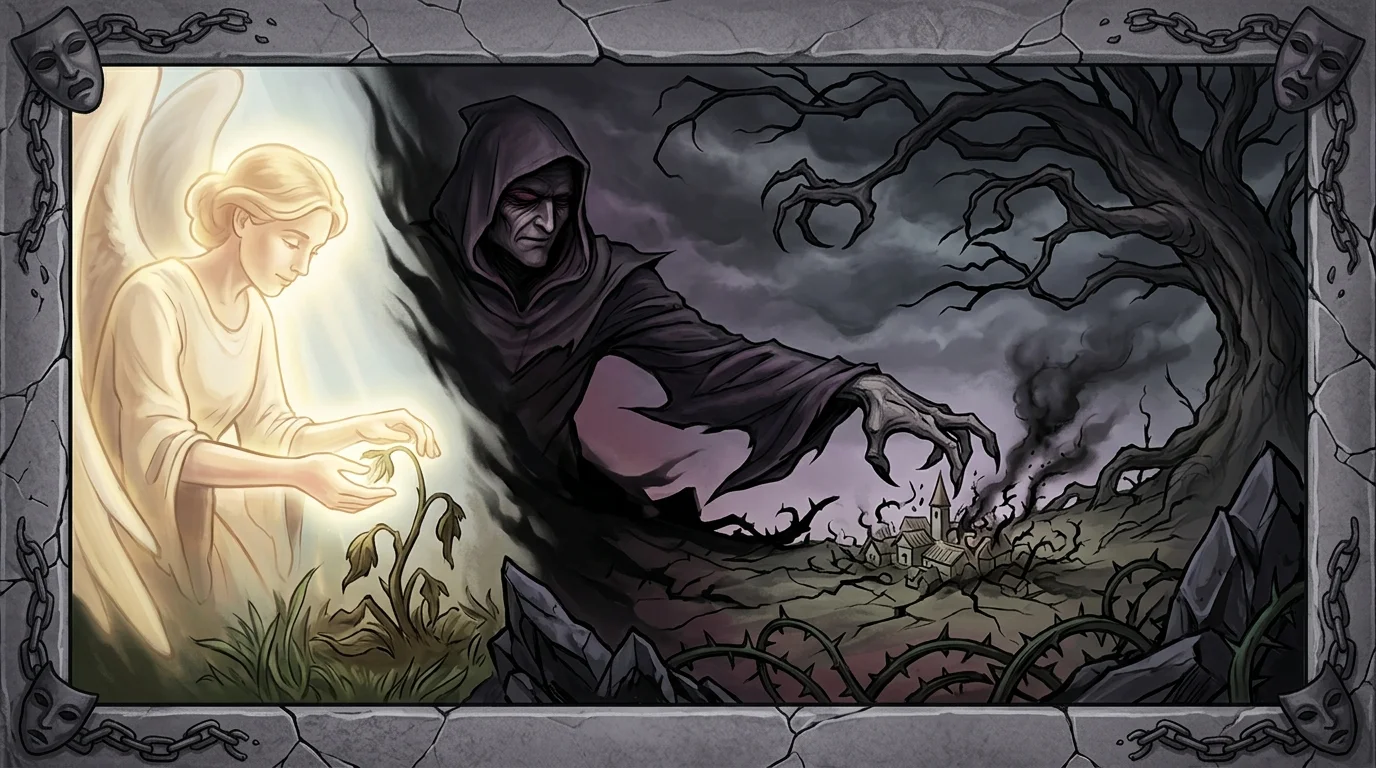
What Does Evil Meaning?
Quick Definition
Evil means morally wrong, wicked, or intentionally harmful behavior, actions, or intentions.
Evil as an Adjective
As an adjective, evil describes someone or something that is wicked or harmful.
Examples:
- “The villain had an evil plan.”
- “They condemned the evil actions.”
Evil as a Noun
As a noun, evil refers to wickedness, suffering, or harmful forces.
Examples:
- “Good triumphs over evil.”
- “The story explores the nature of evil.”
What Does It Usually Mean?
The word is commonly associated with:
- Wickedness
- Cruelty
- Harm
- Immorality
- Malice
- Corruption
What Tone Does It Convey?
The term is generally:
- Strong
- Serious
- Negative
- Moral
- Emotional
Different Types of Evil
Moral Evil
Actions deliberately committed by people that cause harm.
Examples:
- Murder
- Theft
- Fraud
- Abuse
Natural Evil
Suffering caused by natural events rather than human actions.
Examples:
- Earthquakes
- Floods
- Hurricanes
- Diseases
In philosophy and religion, these are often discussed separately from moral evil.
Fictional or Supernatural Evil
Many books, movies, and myths portray evil as a supernatural force or villain.
Examples:
- Evil witches
- Dark sorcerers
- Demonic beings
- Villains seeking power
How People Actually Use “Evil”
The word appears in many situations.
Everyday Conversations
Example: “That was an evil thing to do.”
Meaning:
The action was extremely cruel or morally wrong.
Religion
Many religions describe evil as behavior or forces that oppose goodness, justice, or divine principles.
Literature and Movies
Stories often explore the conflict between good and evil.
Example: “The hero defeated the forces of evil.”
Meaning:
The hero overcame wicked or destructive opponents.
News and Media
Journalists may use the word to describe especially shocking crimes or acts of violence.
Real Examples of “Evil” in Conversations
Example 1
Person A: Why was the villain so feared?
Person B: Because he committed many evil acts.
Meaning: His actions were considered deeply immoral.
Example 2
Person A: Do you think stealing is evil?
Person B: Many people believe intentional theft is morally wrong.
Meaning: They are discussing moral behavior.
Example 3
Person A: The movie was about good versus evil.
Person B: That’s a classic storytelling theme.
Meaning: The story contrasts morality and wickedness.
Example 4
Person A: That scam targeted elderly people.
Person B: That’s an evil thing to do.
Meaning: The act is viewed as especially cruel.
Example 5
Person A: Is every bad decision evil?
Person B: No. Evil usually refers to serious moral wrongdoing or intentional harm.
Meaning: Not all mistakes are considered evil.
Common Mistakes and Misunderstandings
Mistake 1: Thinking Evil Means Any Mistake
Not every mistake or poor decision is evil. The word usually refers to actions involving serious harm or intentional wrongdoing.
Mistake 2: Using Evil for Minor Problems
Calling a minor inconvenience “evil” is often seen as exaggeration.
For example:
- “This homework is evil.”
This is usually meant humorously rather than literally.
Mistake 3: Assuming Evil Only Refers to People
The word can also describe:
- Actions
- Ideas
- Plans
- Forces
- Behavior
Mistake 4: Confusing Evil with Bad
Bad is a broader term that can describe something unpleasant or of poor quality.
Evil implies serious moral wrongdoing or wicked intent.
Related Words and Synonyms
| Word | Meaning | Difference |
|---|---|---|
| Evil | Morally wrong or wicked | Strongest general term |
| Wicked | Morally bad or cruel | Often similar to evil |
| Sinful | Against religious or moral law | Religious emphasis |
| Cruel | Causing pain without concern | Focuses on behavior |
| Malicious | Intentionally harmful | Focuses on intent |
| Corrupt | Dishonest or morally compromised | Often used for institutions or officials |
| Immoral | Against accepted moral standards | Broader ethical term |
| Villainous | Characteristic of a villain | Often used in fiction |
| Harmful | Causing damage | Doesn’t always imply moral intent |
| Malevolent | Having evil intentions | Formal and literary term |
Is “Evil” Positive, Negative, or Neutral?
Evil is an extremely negative word.
It often suggests:
- Serious wrongdoing.
- Intentional harm.
- Wickedness.
- Cruel intentions.
- Lack of morality.
Because of its strength, it should be used carefully and accurately.
Related posts:
 Best Harakiri Meaning Definition, History, Cultural Significance & Modern Usage (2026)
 Best Concentration Meaning: Definition, Examples, Uses, and Types (2026)
 Best MPH Meaning Essential Definition, Full Form & Common Uses (2026)
 Best Coefficient Meaning: Definition, Formula, Examples & Uses in Math (2026)