
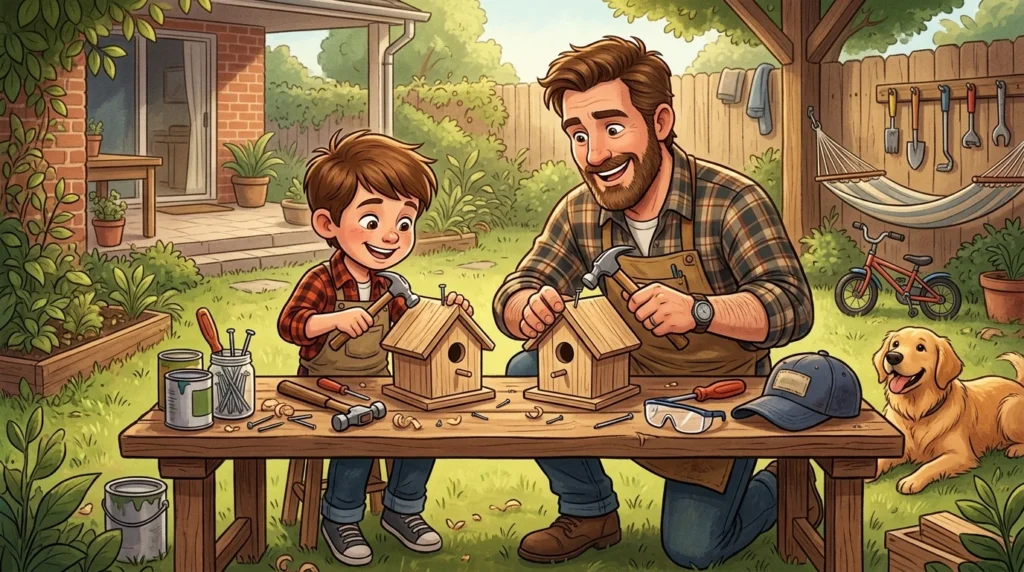
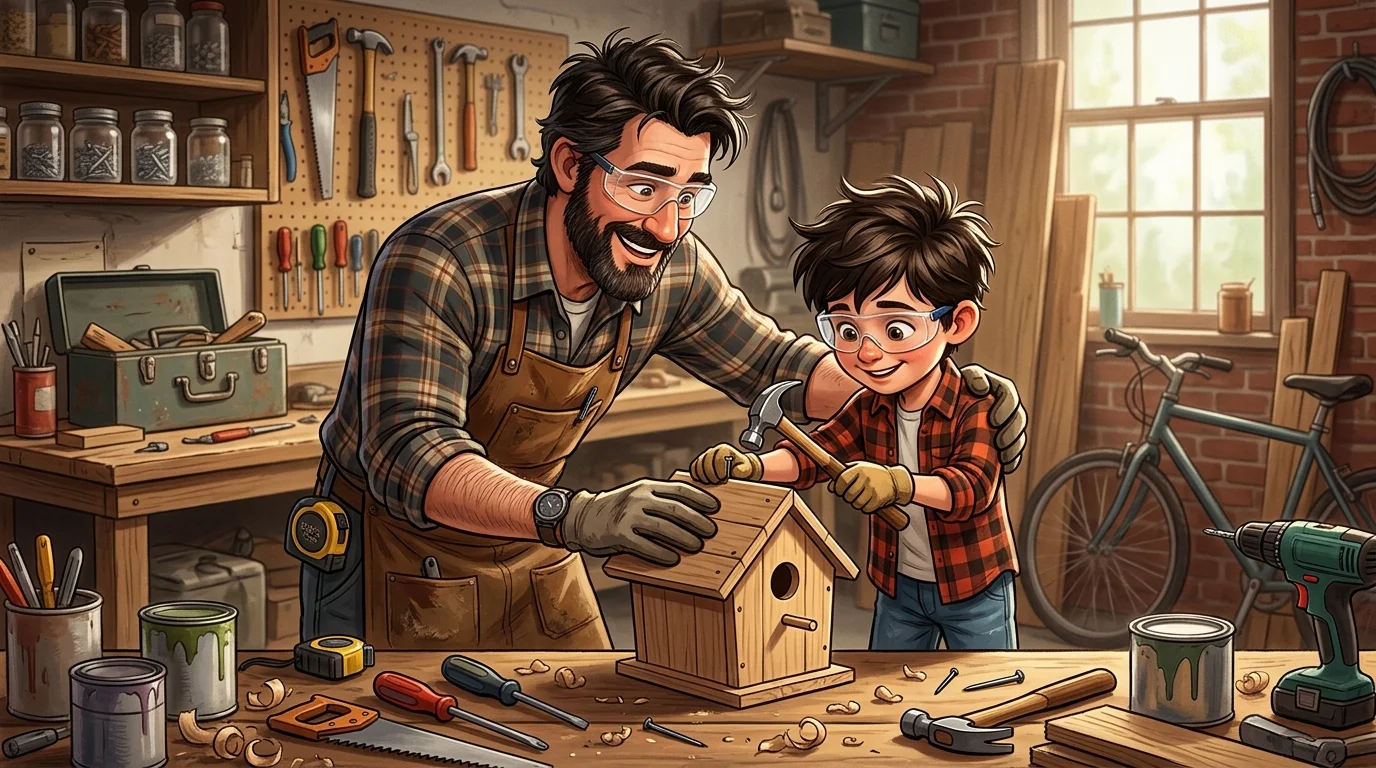
What Does “Like Father, Like Son” Mean?
Quick Definition
“Like father, like son” means a son is similar to his father in appearance, personality, behavior, interests, or abilities.
Literal Meaning
The proverb suggests that sons often reflect their fathers because of:
- Genetics
- Family influence
- Shared experiences
- Learned behaviors
- Upbringing
What It Usually Means
People use the phrase when a son:
- Looks like his father.
- Has similar talents.
- Shares the same hobbies.
- Acts in a familiar way.
- Follows the same career path.
What Tone Does It Convey?
Depending on the situation, the phrase can express:
- Admiration
- Pride
- Humor
- Affection
- Mild criticism
What Does “Like Father, Like Son” Mean in Different Contexts?
Family Life
The proverb is often used when family members notice similarities between a father and his son.
Example:
“They both love fishing—like father, like son.”
Sports
It may describe a son who inherits athletic talent.
Example:
“His dad was a great baseball player, and now he’s breaking records too. Like father, like son.”
Career
The phrase can refer to sons following their fathers into the same profession.
Example:
“He became a firefighter just like his father. Like father, like son.”
Personality
People use it when fathers and sons share similar attitudes or behaviors.
Example:
“They’re both incredibly generous. Like father, like son.”
Origin and History of “Like Father, Like Son”
The idea behind this proverb dates back thousands of years. Similar expressions appear in ancient Greek, Latin, and other cultures, emphasizing that children often resemble their parents.
The modern English version, “Like father, like son,” has been used for centuries and remains one of the most recognizable family-related sayings in the language.
How People Actually Use “Like Father, Like Son”
You’ll often hear the proverb in conversations about family resemblance or shared traits.
Examples include:
- “He laughs exactly like his dad—like father, like son.”
- “They’re both talented musicians. Like father, like son.”
- “He inherited his father’s love of cars.”
- “The family business continues—like father, like son.”
Real Examples of “Like Father, Like Son” in Conversations
Example 1
Person A: Your son plays guitar really well.
Person B: Thanks! Like father, like son.
Meaning: They share the same musical talent.
Example 2
Person A: They have the same smile.
Person B: Like father, like son.
Meaning: Physical resemblance.
Example 3
Person A: Both of them became doctors.
Person B: Like father, like son.
Meaning: Same career path.
Example 4
Person A: They both love hiking.
Person B: Like father, like son.
Meaning: Shared interests.
Example 5
Person A: He tells the same jokes as his dad.
Person B: Like father, like son.
Meaning: Similar personality.
Example 6
Person A: He always helps his neighbors.
Person B: Like father, like son.
Meaning: Shared values.
Example 7
Person A: They both have incredible cooking skills.
Person B: Like father, like son.
Meaning: Similar abilities.
Example 8
Person A: He never gives up.
Person B: That’s like father, like son.
Meaning: Shared determination.
Example 9
Person A: He spends every weekend fixing old cars.
Person B: Just like his father—like father, like son.
Meaning: Shared hobby.
Example 10
Person A: They both forget where they put their keys.
Person B: Like father, like son!
Meaning: Shared habit, used humorously.
Common Mistakes and Misunderstandings
People sometimes think:
- The proverb only refers to physical appearance.
- It always has a positive meaning.
- It means sons are exactly the same as their fathers.
In reality:
- It can describe looks, behavior, talents, interests, or habits.
- It may be used positively, neutrally, or humorously.
- It points out similarities, not complete sameness.
Similar Proverbs and Expressions
| Expression | Meaning | Difference |
|---|---|---|
| Like father, like son | Sons resemble their fathers | Focuses on fathers and sons |
| Like mother, like daughter | Daughters resemble their mothers | Female equivalent |
| A chip off the old block | A child is very similar to a parent | More informal |
| The apple doesn’t fall far from the tree | Children resemble their parents | Applies to any parent and child |
| Following in someone’s footsteps | Choosing the same path as another person | Focuses on career or lifestyle |
| Runs in the family | A trait is common among relatives | Refers to the whole family |
| Born with it | A natural or inherited ability | Emphasizes innate talent |
| Family resemblance | Similar appearance or behavior | Broader expression |
Is “Like Father, Like Son” Positive, Negative, or Neutral?
The proverb is generally positive or neutral.
It often expresses admiration for shared talents or values, but it can also be used humorously—or occasionally critically—when a son repeats a father’s less desirable habits.
Should You Use the Phrase “Like Father, Like Son”?
Use It When
- Pointing out family resemblance.
- Praising shared talents.
- Discussing inherited traits.
- Talking about similar careers or hobbies.
- Making lighthearted observations.
Avoid It When
- Comparing unrelated people.
- Assuming every similarity is inherited.
- Making unfair judgments based solely on family relationships.
Related posts:
 Best Harakiri Meaning Definition, History, Cultural Significance & Modern Usage (2026)
 Apocryphal Meaning: Definition, Origin, Examples & How to Use It (2026)
 Best Nine Line Meaning: Definition, Origin, Uses, Examples & What It Represents (2026)
 Optometrist Meaning Explained Complete Guide, Definition & Helpful Examples (2026)